

India notified its first four ‘mega ports’ under the Indian Ports Act, 2025.
The four ports are Mundra, Deendayal (Kandla), Jawaharlal Nehru Port and Paradip.
The classification is based on cargo-handling thresholds of 150 million tonnes or 7.5 million TEUs.
The notification took effect from September 25, 2026.
Mundra is the only privately owned port among the four.
India’s Ministry of Ports, Shipping and Waterways notified four ports as the country’s first ‘mega ports’.
The four ports are Mundra, Deendayal (Kandla), Jawaharlal Nehru Port (Nhava Sheva) and Paradip.
The classification was issued under Section 73 of the Indian Ports Act, 2025.
The notification was issued on September 25, 2026, and took effect from its publication in the Gazette of India.
The five-year classification is based on annual cargo-handling thresholds of 150 million tonnes for bulk ports or 7.5 million TEUs for container ports.
Mundra Port, operated by Adani Ports and Special Economic Zone, is the only privately owned facility among the four.
The other three mega ports are government-run facilities.
Paradip Port is the only mega port on India’s east coast among the four notified.
This is the first time India has introduced a mega port classification, following the enactment of the Indian Ports Act, 2025.
Jawaharlal Nehru Port, located at Nhava Sheva near Mumbai, is one of India’s busiest container ports.
Deendayal Port, formerly known as Kandla Port, is located in Gujarat.
The mega port classification is expected to be reviewed periodically based on cargo-handling performance.
India’s port sector has seen significant private and public investment in recent years as trade volumes have grown.
The Indian Ports Act, 2025, replaced an older colonial-era law governing port administration in the country.
Cargo-handling capacity at major Indian ports has expanded steadily over the past decade.
Container throughput and bulk cargo volumes are commonly used indicators of a port’s scale and economic significance.
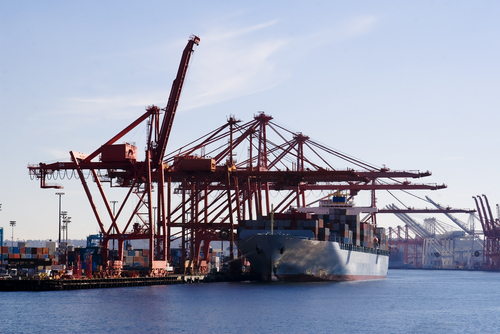
Mundra Port, Gujarat (representative image), Wikimedia Commons, CC BY-SA 3.0