

The Ministry of External Affairs said on October 23 that the India-China border situation gets disturbed from time to time when Chinese forces diverge from established patrolling patterns.
The remarks came a day after the ITBP director general said face-offs were continuing at several locations in Arunachal Pradesh.
Spokesperson Randhir Jaiswal said both sides continue to use diplomatic and military mechanisms.
Questions on operational details were referred to the Ministry of Defence.
The reports carried no response from China.
The Ministry of External Affairs said on Friday, October 23, 2026, that the situation in the India-China border areas gets disturbed from time to time when Chinese forces diverge from established patrolling patterns, according to Business Standard and Apnlive.
Spokesperson Randhir Jaiswal made the remarks at a regular media briefing, according to Apnlive.
The remarks came in response to a question about statements by the director general of the Indo-Tibetan Border Police, according to Business Standard.
Shatrujeet Kapur, as the name is spelt by Apnlive, said on Thursday, October 22, that face-offs between Indian and Chinese forces had occurred at several locations in Arunachal Pradesh in recent days and were continuing. Some outlets spell the name Kapoor.
The ITBP chief spoke to personnel at a force base in Alwar, Rajasthan, ahead of the force’s 65th Raising Day on October 24, according to the reports.
The ITBP chief said the force had mobilised its newly raised Shaurya commando unit during the face-offs, according to Apnlive.
The chief also highlighted drone platoons for border units and a new training course to prepare personnel for battles similar to the 2020 Galwan Valley clash, according to the same report.
Some reports quote the ITBP chief as saying that conventional warfare is no longer sufficient to counter China.
Jaiswal said that maintaining peace and tranquillity in the border areas is essential for the development of bilateral relations, according to Business Standard.
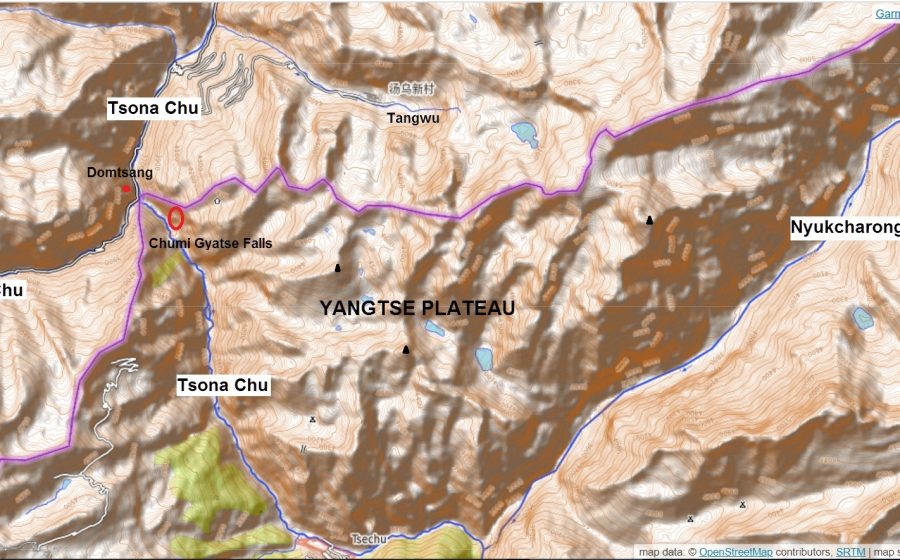
Map of the Yangtse-Tawang area, Arunachal Pradesh (file image), Wikimedia Commons, CC BY-SA 4.0