Richard Abdulkader takes on a new acting challenge in the Syrian series “Out of Coverage” after exploring a diverse musical career, while Nancy Al-Wajerji opens up about marriage, motherhood, fame, and life behind the camera.
The path to stardom no longer necessarily runs through television studios or established entertainment companies. In the digital age, a story can begin in an ordinary home with a camera and a smartphone, before evolving into a phenomenon followed by millions and opening doors that once seemed unimaginable.
Yet the greater challenge is not achieving fame, but navigating what comes afterward. How does someone preserve a normal life when everyday moments become public entertainment? And how can a digital content creator transition into the entertainment industry without remaining confined to the identity that first made them famous?

These questions lie at the heart of the journey of Richard, widely known as “Richo,” whose real name is Abdul Qader Salah Al-Din, and his wife Nancy Al-Wajerji, popularly known as “Nannosh.” Together, they have built a substantial following across social media platforms, transforming ordinary family moments into a recognizable digital brand while gradually expanding their ambitions beyond online content.
Richard has ventured into music, releasing songs spanning romantic ballads, upbeat contemporary tracks, and family-oriented compositions. His repertoire includes “Lebset El Tarha,” “Halali Enti,” “Al Khasr Al Mayyal,” “Omi,” “Banoutet Albi,” and “Daftar Al Aileh,” alongside “Zweina” and his latest release, “Halaki Kafi.”
His move into acting through the Syrian television series “Out of Coverage” marks another turning point, placing his artistic abilities in a setting where popularity alone cannot guarantee success.
Nancy, meanwhile, has established an identity of her own. While remaining Richard’s partner in life and content creation, she continues to navigate the challenges of motherhood, marriage, public visibility, and personal independence.

In this wide-ranging interview, Richard and Nancy discuss their beginnings, musical ambitions, acting opportunities, family life, public recognition, and the pressures of digital fame. Above all, they reflect on a question that resonates far beyond social media: What remains of a person when the camera stops rolling?
Q: Richard, let’s start at the beginning. How did your everyday life become content followed by millions? Did you ever imagine reaching this point?
Richard: I didn’t start out thinking about fame or millions of followers. I simply enjoyed filming and sharing moments from our lives. I felt that even the simplest situations could connect with people. We didn’t have a grand strategy, and we certainly didn’t know where the journey would take us. Over time, however, we discovered that audiences appreciate authenticity. They connect with people who feel familiar and relatable.
Nancy: At first, I was more hesitant than Richard. I was concerned about privacy and the boundaries we needed to maintain. But I gradually noticed how strongly people responded to the natural moments we shared. Our relationship with the audience became something much deeper than simply posting videos and receiving views.
Q: Was there a point when success began imposing a lifestyle you hadn’t entirely chosen?
Richard: Absolutely. As your audience grows, so does your responsibility. You feel pressure to remain active, introduce new ideas, and maintain your public image. Sometimes it feels as though you can never stop. But I’ve learned that being consistent doesn’t mean filming every moment of our lives.
Nancy: Fame is wonderful, but it requires awareness. It’s not easy to maintain a normal family life when people expect to know what you did today, where you went, and what happened at home. We’ve learned that certain parts of our lives must remain private.
Q: Millions know you as a content creator, but you have now released an extensive collection of songs. Was singing a long-held dream, or did it emerge because of your online success?
Richard: Singing isn’t simply something I decided to pursue because I became famous. I’ve loved music for years, and I’ve always felt it gives me a different way to express myself. Content creation brought me closer to audiences, but it wasn’t the only reason I wanted to sing. I wanted to create something that carried my voice and personality, and to challenge myself in a field I genuinely love.
Q: Your earlier releases included “Haqqi Ghar,” “Kalbi Yureedak,” and “La Tizal Ya Helou,” followed by “Lebset El Tarha,” “Zaman Al Maslaha,” and “Zahmet Oshaq.” Looking back, do you consider that period the beginning of your search for a musical identity?
Richard: I believe every artist goes through different stages before discovering the style that suits them best. Those early songs are important to me because they represent the beginning of the journey, with all its enthusiasm, experimentation, and lessons. I don’t evaluate them solely by their popularity or view counts. I look at what each experience taught me and how it contributed to my development.
Q: “Lebset El Tarha” evokes weddings and celebrations, while “Halali Enti” leans toward romance. How much of your music is inspired by your personal life and your relationship with Nancy?
Richard: Naturally, my personal experiences influence my artistic choices. When you’ve experienced love, marriage, and building a family, certain themes become especially meaningful. But I don’t want every song to be autobiographical. I want to express emotions that listeners can recognize in their own lives, whether they’re in love, preparing for marriage, or remembering a beautiful moment.
Nancy: I love seeing Richard perform songs that reflect his personality, but I also enjoy it when he surprises audiences with something new. Not every romantic song has to be written about me for me to appreciate it!
Q: Songs such as “Al Khasr Al Mayyal,” “Miya Fil Miya,” “Mahret Zamanak,” and “Gentleman” embrace youthful, energetic rhythms. Is this the musical style closest to your personality, or are you determined not to be confined to one genre?
Richard: I enjoy songs that carry energy and connect with people immediately, but I don’t want to limit myself to a single style. Sometimes I’m drawn to upbeat music, while at other times I prefer romance or something completely different. What matters most is that I genuinely connect with the song and bring something fresh to it.
Q: “Al Khasr Al Mayyal” gained notable attention on digital platforms. Do you consider it a turning point in your music career? And do you now select songs based on their potential to go viral on TikTok and Instagram Reels?
Richard: Visibility matters to every artist, and nobody can ignore the influence of digital platforms today. But there’s a difference between choosing a song because you believe in it and creating one simply to become a trend. Of course, I want my music to reach as many people as possible. But I don’t want its relevance to disappear after a few days of online popularity.
Q: You’ve also released “Masjoun,” “Moktafi,” “Khasrana,” “Mokhtalifa,” “Elm Al Nafs,” “Khalq Al Eshq,” and “Ekhwat Bel Eshq.” Are you deliberately exploring different emotional experiences beyond conventional romantic songs?
Richard: I enjoy exploring different emotions and subjects. Not every song can be about happiness or love in the same way. There is disappointment, longing, heartbreak, confrontation, and strength. These are all emotions people experience, and I believe an artist needs variety to avoid repeating himself.
Q: Releasing music frequently can be a double-edged sword. Are you concerned that constantly producing songs might become a way of maintaining visibility rather than giving each release the attention it deserves?
Richard: That’s an important question. I believe consistency matters, but quality matters more. I don’t want to release a song simply because I haven’t published anything for a while. I try to learn from every project and think about how I can make the next one better.
Q: Beyond romantic music, you’ve released songs such as “Omi,” “Banoutet Albi,” and “Daftar Al Aileh.” Do these works reveal the emotional and family-oriented side of your personality that audiences recognize from your daily content?
Richard: Family is a fundamental part of my life, so it’s natural that it influences my music. Songs about mothers, children, and family relationships carry a different emotional weight because they touch experiences we all understand. Sometimes a simple song about family can reach the heart more deeply than many other productions.
Q: “Banoutet Albi” carries a deeply affectionate family theme, while “Daftar Al Aileh” directly celebrates family life. Are you consciously building a connection between your identity as a husband and father and your identity as a singer?
Richard: I don’t always approach it that way, but I can’t completely separate my personal life from my art. Perhaps audiences feel especially connected to these songs because they knew me as a family man before hearing me as a singer. Still, I hope the music can reach people who have never heard of me and that they appreciate it for its message and emotion.
Nancy: I think these songs reveal something very genuine about Richard. People know his humorous personality and lively presence on camera, but he also has a sensitive and emotional side, particularly when it comes to family.
Q: In your 2026 release “Zweina,” you explored Moroccan musical influences, with lyrics by Raoul and music composed by Ammar Al-Deirani. Why did you choose this direction? Was it a deliberate attempt to step outside the dialect and style your audience knows?
Richard: I enjoy experimenting with different musical styles rather than staying within the same familiar space. A good song can connect with listeners even when it’s performed in a dialect they’re not accustomed to hearing from you. Every new experience presents a challenge, whether in vocal performance, emotional expression, or the way the song is presented.
Q: Did performing in a Moroccan dialect require additional preparation to ensure the result felt authentic rather than simply an attempt to attract a new audience?
Richard: Definitely. Every dialect has its own character, musicality, and way of expressing emotion. I don’t like performing something I don’t genuinely feel. Any experience of this kind should begin with respect for the musical tradition itself, rather than merely the ambition to reach a different audience.
Q: Your latest single, “Halaki Kafi,” was released in October 2026, with lyrics by Mohammad Darwish and music by Ammar Al-Deirani. What did you hope to communicate through this song, and what distinguishes it from your earlier work?
Richard: I enjoy songs with positive energy and lyrics that feel close to everyday people. With every new release, I try to add something to my experience, whether through the melody, vocal delivery, or overall atmosphere. For me, each new song is an opportunity to discover another side of what I can offer.
Q: “Halaki Kafi” embraces direct romantic expression and contemporary language. Do you think light, accessible songs now reach audiences more quickly than music that demands more attentive listening?
Richard: Every type of music has its audience and its place. Some songs are perfect for driving or celebrating a happy occasion, while others require a different mood. I don’t believe light music is necessarily less valuable. Simplicity can also require intelligence in songwriting, composition, and performance.
Q: You’ve collaborated with composers including Ammar Al-Deirani, Ayman Hammoud, Mohammad Issa, and Ahmad Jomaa. What do you look for in a composer or lyricist before agreeing to a project?
Richard: The most important thing is feeling that the song suits my voice and personality, and that there’s mutual understanding within the creative team. I enjoy hearing new ideas and learning from the people I work with. A successful song is never the achievement of just one person. It’s the result of collaboration among several creative individuals.
Q: In 2023, you released “La Tahzani Falastin” (“Don’t Be Sad, Palestine”), a song addressing a very different subject from romance and celebration. What does it mean to use your voice to express solidarity with a humanitarian cause?
Richard: I believe an artist is a human being before anything else, and it’s natural to be affected by what’s happening around us. Music isn’t only about entertainment. It can also express grief, hope, and solidarity. Some events affect you so deeply that you feel compelled to respond through your art.
Q: Given the crises affecting the region, do you believe artists have a responsibility to take public positions, or should music remain separate from politics?
Richard: I believe every artist has their own way of expressing themselves. I don’t want to impose rules on anyone, but I do believe people cannot completely disconnect themselves from the world around them. What matters is sincerity. Humanitarian causes should never become tools for generating publicity.
Q: Some argue that social media personalities enjoy an unfair advantage in music because they already have established audiences, while traditional singers may spend years building recognition. Do you consider that advantage fair?
Richard: Digital fame gives you access to an audience, but it doesn’t guarantee success as a singer. People might listen to your first song because they already know you, but they won’t keep listening unless they genuinely enjoy the music. The real challenge is convincing people of your artistic abilities, not simply receiving support because they follow you online.
Q: How do you respond to critics who describe you as a content creator who sings rather than a singer in the artistic sense?
Richard: I accept criticism when it’s constructive and objective. Everyone has the right to like or dislike my voice. But I don’t believe starting in one profession should prevent someone from developing their abilities in another. I don’t want to convince people through words. I’d rather let my work speak for itself over time.
Q: Have you considered studying music formally and developing your vocal abilities academically, or do you prefer learning through experience?
Richard: I believe learning should never stop. Anyone who wants to build a lasting artistic career must continue developing their skills, listening to feedback, and working on weaknesses. I certainly don’t consider myself someone who has reached a point where there’s nothing left to learn.
Q: Nancy, when you listen to Richard’s songs, are you the supportive wife who encourages everything he does, or the honest critic who tells him when a song doesn’t suit him?
Nancy: I absolutely support him, but support doesn’t mean agreeing with everything. If I like a song, I tell him. If I think something needs improvement, I’m equally honest. He knows my opinion isn’t simply a compliment, and perhaps that’s why he keeps asking for it.
Richard: The problem is that she doesn’t stop at giving her opinion. Sometimes she starts suggesting changes as though she’s the music producer!
Nancy: What matters is that I want the best for him, even when he doesn’t immediately appreciate my suggestions.
Q: After establishing yourself in music, you’ve entered acting through the Syrian television series “Out of Coverage,” alongside several established Syrian stars. Was this transition more challenging than entering the music industry?
Richard: Acting is completely different from singing and content creation. On YouTube, I control many aspects of what I produce. On a television series, you’re part of a larger team, and you must respect the script, the director’s vision, and the rhythm of each scene. It was an important experience because it taught me to approach the camera from an entirely different perspective.
Q: The series is a social comedy set in a village struggling with the absence of network coverage, an amusing contrast to your own world, which depends heavily on constant internet connectivity. Did that premise resonate with you personally?
Richard: I find the concept fascinating, especially because we live in a world where the internet has become an essential part of everyday life. It’s interesting to imagine how relationships and daily situations change when connectivity disappears. Comedy can reveal a great deal about the way we live.
Q: The cast includes experienced Syrian actors such as Fayez Kazak, Jenny Esber, Nazli Al Rawas, and Wael Zidan. How did you approach working alongside such established performers?
Richard: Being part of a production with experienced professional actors is, above all, an opportunity to learn. I don’t want to treat the experience as merely another achievement to add to my résumé. I want to gain practical knowledge and develop a deeper understanding of dramatic performance.
Q: Are you concerned that audiences might judge you before seeing your performance because you come from YouTube rather than formal acting schools or theatre?
Richard: I know those judgments exist, but I can’t control them. What I can do is work seriously, respect the profession, and learn from my mistakes. Ultimately, audiences will watch the performance and make their own judgments. That’s entirely their right.
Q: Do you aspire to take on more serious dramatic roles in the future, or do you believe comedy is the genre best suited to your personality?
Richard: I enjoy comedy, but that doesn’t mean it’s the only area I want to explore. I’d love to develop my abilities and portray different characters. However, I don’t want to rush. I’d rather build my experience gradually.
Q: Many people know you through your partnership with Richard, but you’ve also developed an independent public presence. Has it been difficult to move beyond being identified simply as “Richo’s wife”?
Nancy: I’m proud to be his wife, but that doesn’t mean my identity is limited to our relationship. I have my own ideas, interests, and audience, and I enjoy creating content that reflects who I am. We succeed together, but we each have our own personalities and ambitions.
Q: How do you balance motherhood, work, and constant public visibility? Do you sometimes sacrifice personal time to maintain that balance?
Nancy: I don’t want to pretend it’s easy, because it isn’t. Some days I feel capable of accomplishing everything. Other days I need to stop and rest. I’ve learned not to demand perfection from myself and to adjust my priorities according to the circumstances.
Q: Do you believe social media places unrealistic expectations on women, particularly regarding beauty, marriage, and motherhood?
Nancy: I think that’s one of the biggest problems. People see beautiful photographs and happy moments and sometimes assume other people’s lives are free of difficulties. But that’s simply not true. There is no perfect family, and no woman can be at her best every single day. I hope women understand that constantly comparing themselves with what they see online is neither realistic nor fair.
Q: How do you protect your marriage when audiences follow so many details of your lives and sometimes feel entitled to interfere?
Richard: We’ve learned that there’s a difference between respecting our audience and allowing people to interfere in every aspect of our lives. We appreciate those who follow and support us, but some decisions must remain between us as husband and wife.
Nancy: Sometimes people interpret a simple situation or joke between us in a completely different way from what actually happened. We try not to let every comment become a problem at home.
Q: Do disagreements arise over filming or choosing content? Who has the final say?
Richard: Of course we disagree sometimes. That’s completely natural. I might be enthusiastic about an idea that Nancy doesn’t think suits us, and sometimes it’s the other way around. But we try to reach decisions together.
Nancy: Neither of us makes every decision alone. We discuss things, and sometimes one of us gives up an idea because the other isn’t comfortable with it. For me, our family’s well-being is more important than the success of any video.
Q: What about your children? Are you concerned that early exposure to fame could affect their childhood or sense of identity?
Nancy: Of course we think about that. Children need to experience childhood naturally, without feeling that they have to entertain or satisfy an audience. We try to give them their own private space away from the camera.
Richard: I want my children to grow up knowing that their value has nothing to do with views or followers, and that real life matters far more than fame.
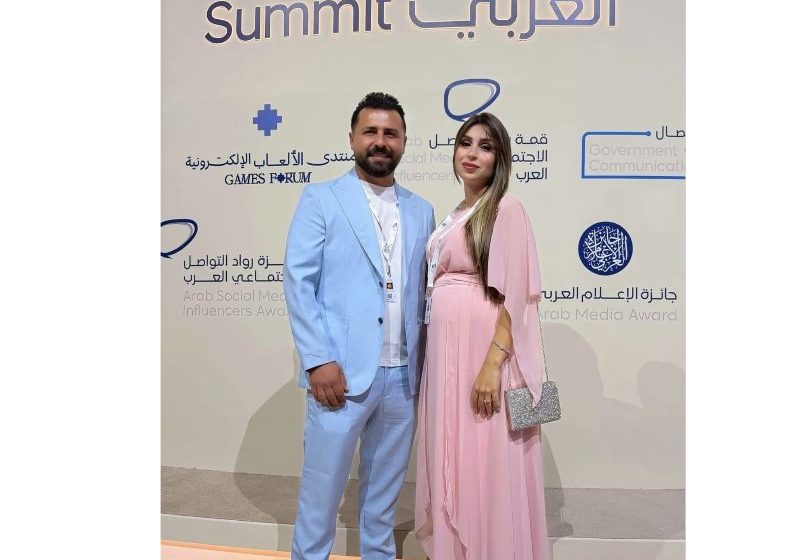
Q: You attended the 2026 Arab Media Summit in Dubai at the invitation of the Dubai Press Club. What did that participation mean to you, particularly as content creators are increasingly recognized as part of the wider media landscape?
Richard: It was an important experience because it highlighted how dramatically the media industry is changing. A few years ago, there was a much clearer separation between traditional media institutions and digital content creators. Today, there’s increasing dialogue and collaboration between the two.
Nancy: What I appreciated most was the opportunity to meet journalists and media professionals with different backgrounds and experiences. These events open new perspectives and encourage us to think more broadly about the future of content creation.
Q: What about your participation in other media gatherings, such as the Fujairah Media Forum? Do these occasions give content creators a greater sense of responsibility?
Richard: Absolutely. When you participate in a professional media event, you realize that your role goes beyond entertainment. There’s a responsibility attached to the words you use, the images you share, and the influence you have on audiences.
Nancy: I believe the real value of these gatherings lies in learning and exchanging experiences, rather than simply appearing at events or taking photographs.
Q: You’ve received recognition and awards throughout your career. Do such honors still carry the same meaning for you?
Richard: Recognition is always appreciated, especially when it reflects genuine effort. But awards have never been the ultimate goal. What’s more important is continuing to produce work that we respect and that audiences appreciate.
Nancy: Recognition always reminds me of our beginnings. I think back to the days when we had no idea where this journey would take us, and I feel grateful to everyone who supported us.
Q: What has fame taken away from your lives?
Richard: Privacy. When people recognize you, even simple everyday activities can become complicated. Sometimes you just want to enjoy an ordinary day without thinking about filming, comments, or how others might perceive you.
Nancy: For me, one of the hardest aspects of fame is that some people believe they know our entire lives because they’ve watched part of them. There are many details that never appear on camera, and every family has the right to keep certain things private.
Q: Are you afraid of declining views or changes in social media algorithms, especially given how quickly digital fame can fade?
Richard: Of course I think about the future, and that’s one reason I’m trying to develop myself in different fields. I don’t want my success to depend entirely on one platform. Music and acting are part of that development, but they’re also fields I genuinely love and want to continue exploring.
Nancy: We can’t tie our happiness to numbers. Views may rise or fall, but family and emotional well-being are far more important than any platform.
Q: Have you ever seriously considered stepping away from content creation?
Richard: There have certainly been moments of exhaustion and pressure, but I love what I do. Sometimes we need a break or a change in how we work. However, I don’t see myself completely leaving the field where my journey began.
Nancy: I think taking breaks is essential. They help us return with renewed energy and remind us that there’s an entire life beyond the screen.
Q: After releasing so many songs and making your acting debut in “Out of Coverage,” how would you like audiences to see you five years from now: as a successful YouTuber, a singer, or an actor?
Richard: I hope people see me as someone who continued developing himself rather than stopping at one achievement. I don’t want to deny my beginnings because they’re an important part of my story. But I also want to demonstrate that I’m capable of producing meaningful artistic work.
Q: Do you dream of performing major live concerts or releasing a full album rather than relying primarily on singles?
Richard: I’d love to see my music career develop and reach a wider audience. Concerts and albums are exciting milestones for any singer. But I’d prefer to take those steps at the right time, when I feel artistically prepared.
Q: Nancy, would you want Richard to become a major entertainment star even if that meant spending less time with the family?
Nancy: Of course I want him to succeed. But I don’t believe genuine success should come at the expense of family. People can achieve ambitious dreams while still protecting the relationships that matter most, provided they learn to manage their time and priorities.
Q: If each of you had to choose one achievement you’re proud of, excluding views, followers, and awards, what would it be?
Richard: That I never stopped trying. I’m proud that I managed to turn something I love into a career, and that my family has been part of that journey.
Nancy: That we’ve managed to preserve our relationship and family through all the changes we’ve experienced. For me, that’s more important than any number.
Q: Finally, what message would you like to share with the audience that has supported you from the beginning?
Richard: I want to thank everyone who followed us, supported us, and believed in us. Our audience gave us the opportunity to develop ourselves and explore new experiences. I hope I can always live up to their expectations, whether through content creation, music, or acting.
Nancy: I want to say how grateful we are for all the love we’ve received. We’re not a perfect family, and we’ve never tried to present ourselves that way. We live, learn, make mistakes, and try to become better people. I hope our relationship with the audience always remains based on affection and mutual respect.
Richard: And I’d like to add that Nancy has been my partner through every stage, including the moments when she wasn’t in front of the camera.
Nancy: And this time, I’ll let him have the final word.
Richard and Nancy may have first captured public attention by sharing everyday family moments, but their story has evolved far beyond the boundaries of their home.

Richard now stands at the intersection of three distinct worlds: digital content creation, which established his public identity; music, through which he hopes to strengthen his artistic presence; and television drama, where he faces a different kind of challenge that demands more than spontaneity and an established fan base.
Nancy, meanwhile, continues to develop her own identity while navigating the complex relationship between public visibility and private life. Her experience reflects a reality increasingly familiar to digital personalities: success does not necessarily require being constantly visible, and protecting family relationships can become one of the greatest challenges in a world that continually demands more content.
Between new music releases, acting opportunities, and videos watched by millions, Richard and Nancy’s journey continues to unfold. Yet perhaps the most meaningful chapter of their story will not be defined by what they achieve on screen, but by what they manage to preserve beyond it.
A camera may create fame, and a song may carry a voice to millions. But what ultimately gives a story lasting value is the person who remains when the spotlight fades.